





A Tradition Set in Stone
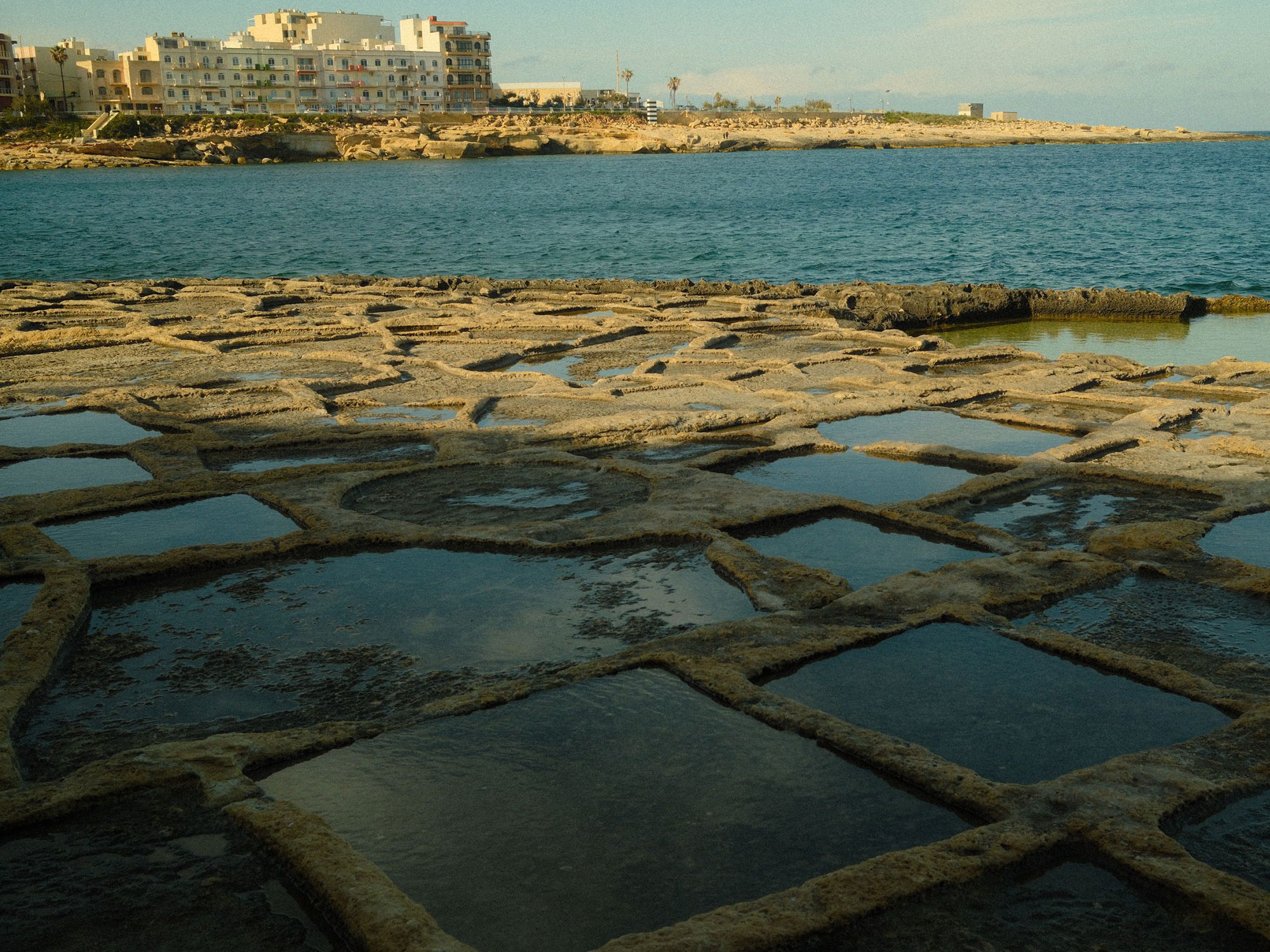
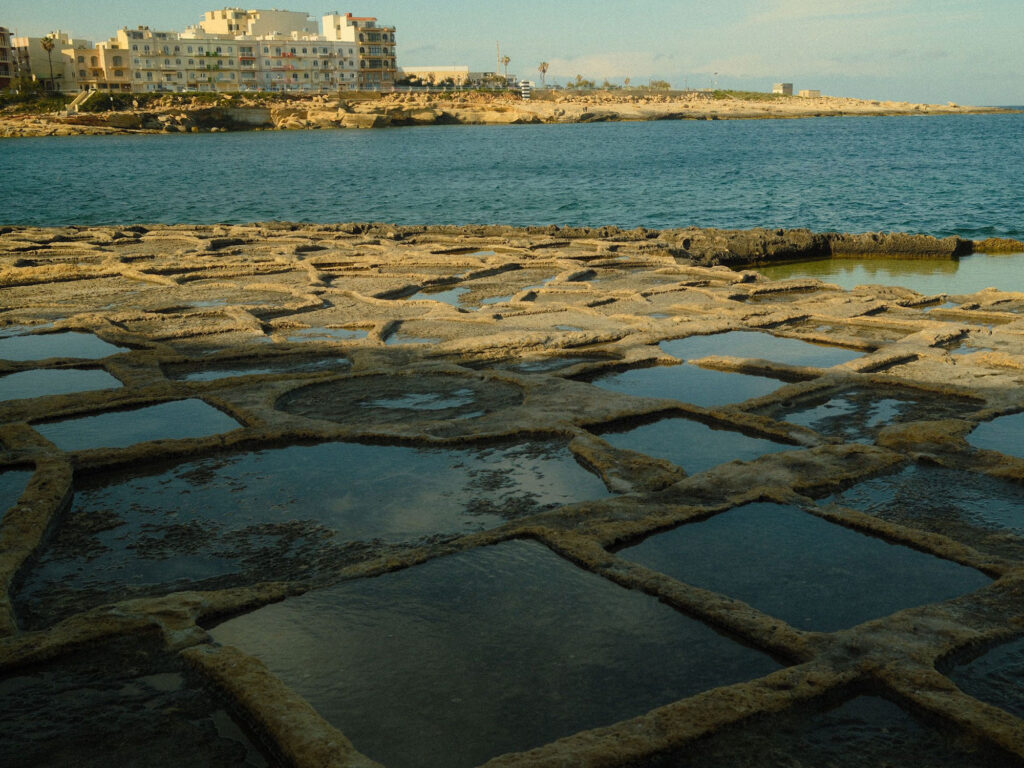
The Maltese coastline is defined by its rugged limestone cliffs and hidden inlets. Along the edge of Marsascala near Żonqor Point, the terrain takes on a different rhythm. Here, shallow geometric basins are carved directly into the bedrock.
These are the historic salt pans, a testament to a centuries old artisanal practice that predates the arrival of the Knights of St. John. Before modern refrigeration, salt was a vital commodity used to preserve the local food supply. Coastal communities transformed the natural geology of the south into functional workspaces, allowing the Mediterranean sun to do the heavy lifting.
During the warmer months, seawater washes into these shallow pools. The intense summer heat slowly evaporates the water, leaving behind pure, mineral rich salt crystals. This natural process is a slow, quiet transformation that requires patience and a deep understanding of the coastal environment.
Craftsmanship Over Convenience
Harvesting sea salt from these pans is a labour intensive craft. It demands physical endurance and a careful eye. Harvesters wait for the exact right moment to sweep the dried crystals into small, brilliant white mounds before gathering them into sacks.
There is a deep human element to this work. Generations of local families have passed down the knowledge of which pools yield the best harvest and how to read the coastal winds. This traditional method stands in sharp contrast to the rapid pace of modern, industrial food production.
Commercial salt is often heavily processed and stripped of its natural minerals. In contrast, artisanal Maltese sea salt retains trace elements from the Mediterranean Sea, offering a distinct, robust flavour. By choosing to harvest salt by hand, local artisans keep a vital piece of Maltese maritime heritage alive.
Enhancing the Modern Kitchen
Integrating this local sea salt into the home brings a tangible piece of Maltese history to the dining table. A simple pinch of coarse, hand harvested salt elevates everyday ingredients. It adds texture and a clean, briny finish to fresh tomatoes, baked fish, or a simple slice of local bread with olive oil.
Appreciating the salt pans of Marsascala goes beyond culinary utility. Supporting the artisans who still work the salt pans ensures that this coastal tradition endures. It allows residents to connect their daily routines with the enduring history carved into the southern shores of the island.